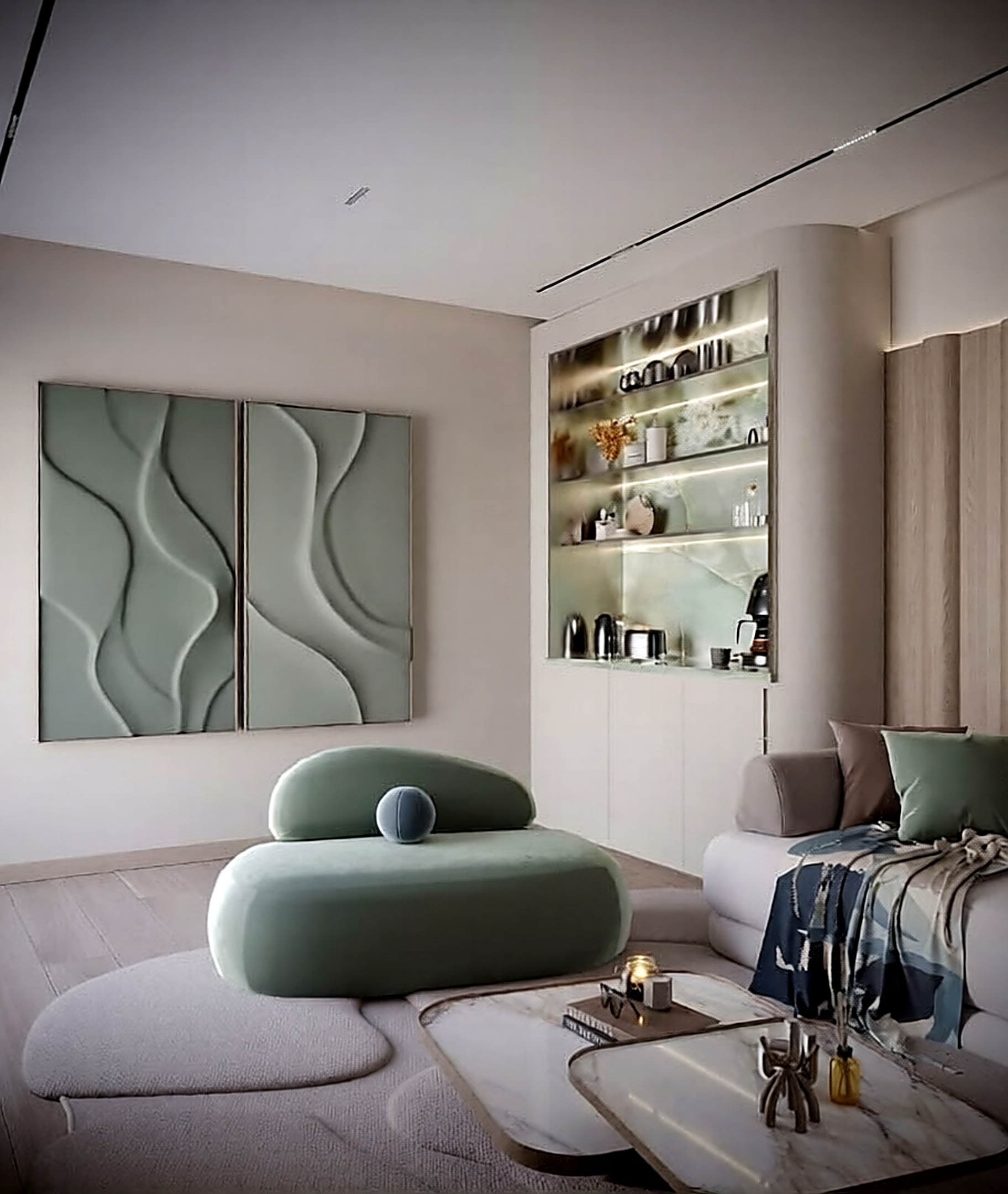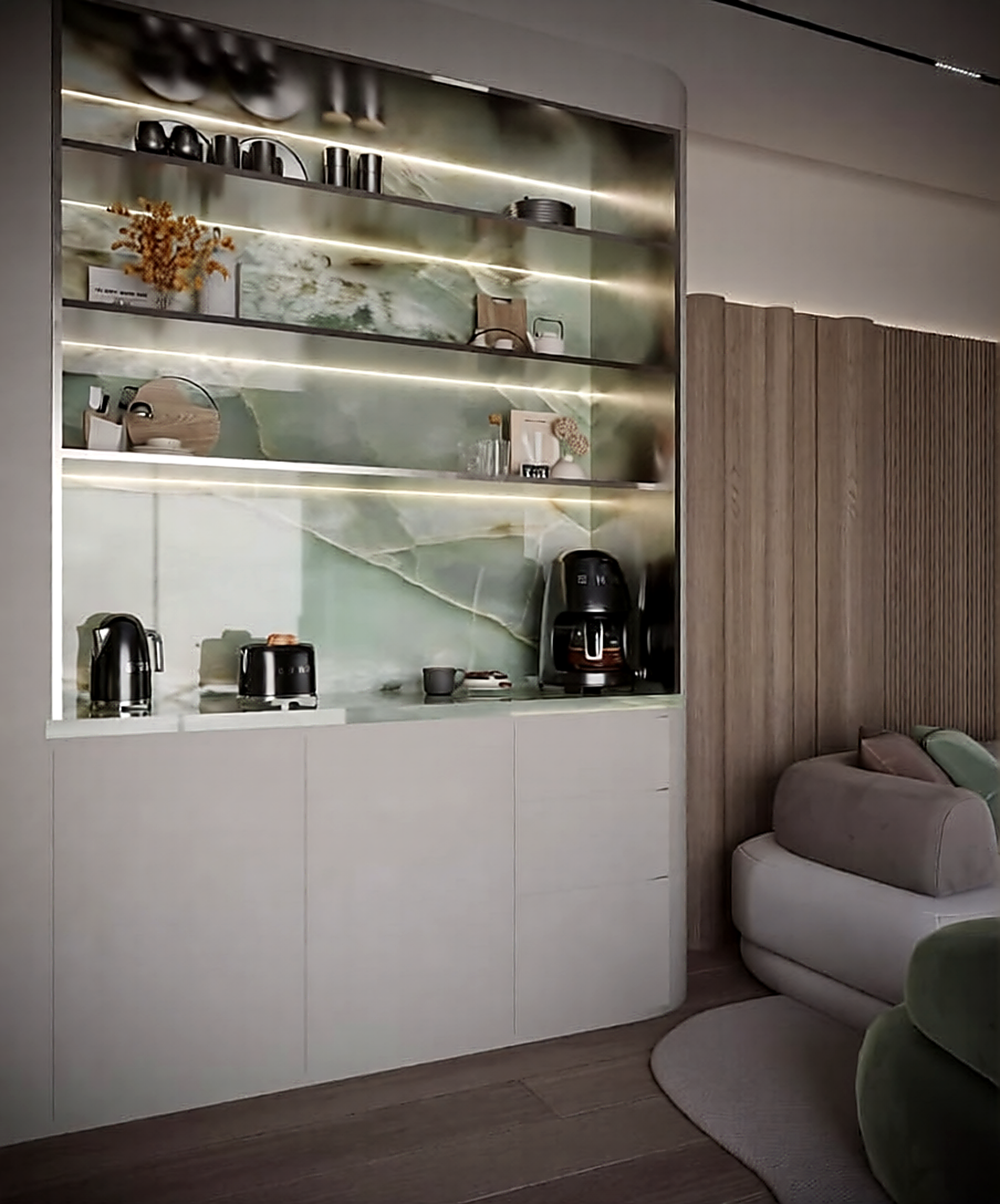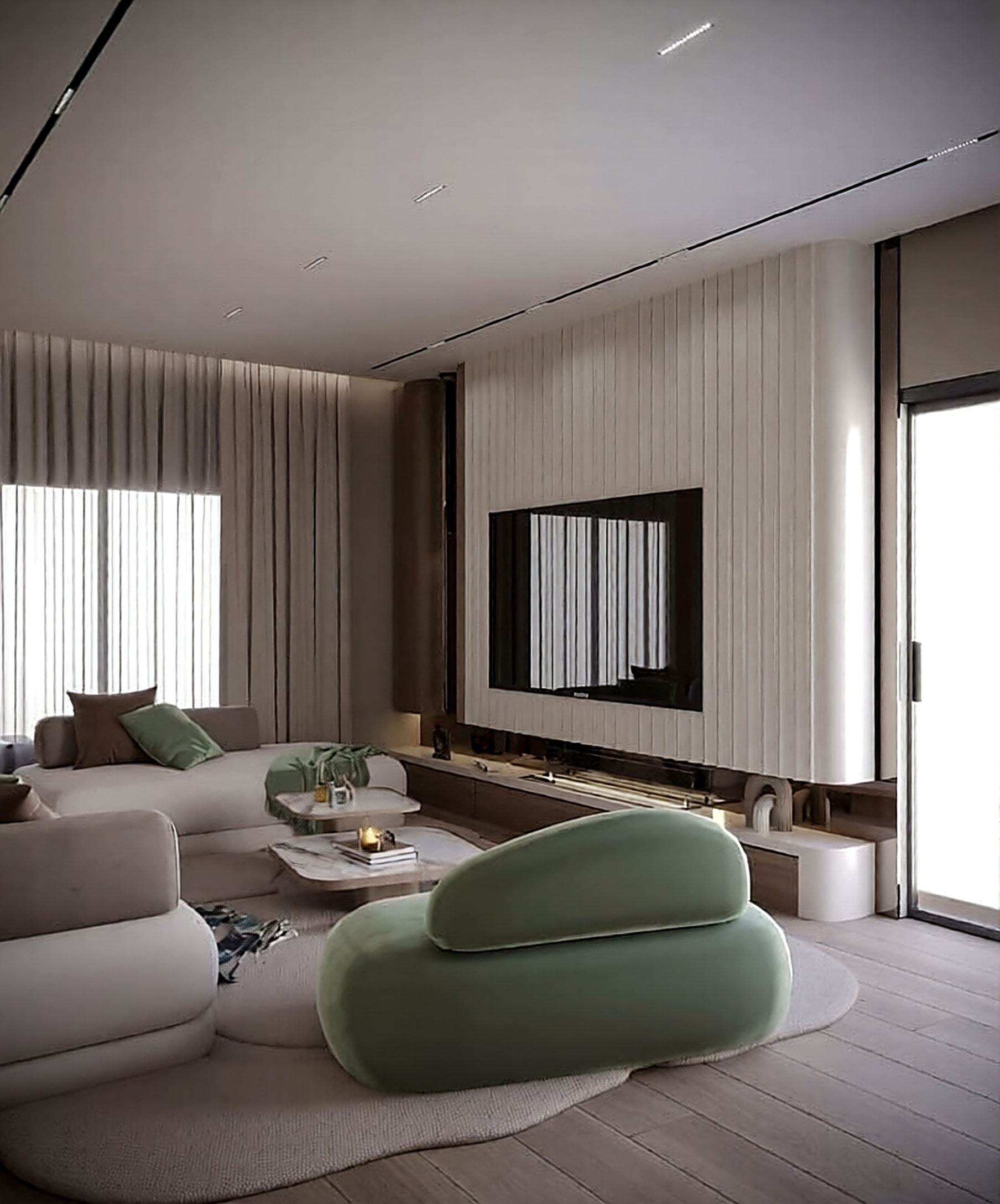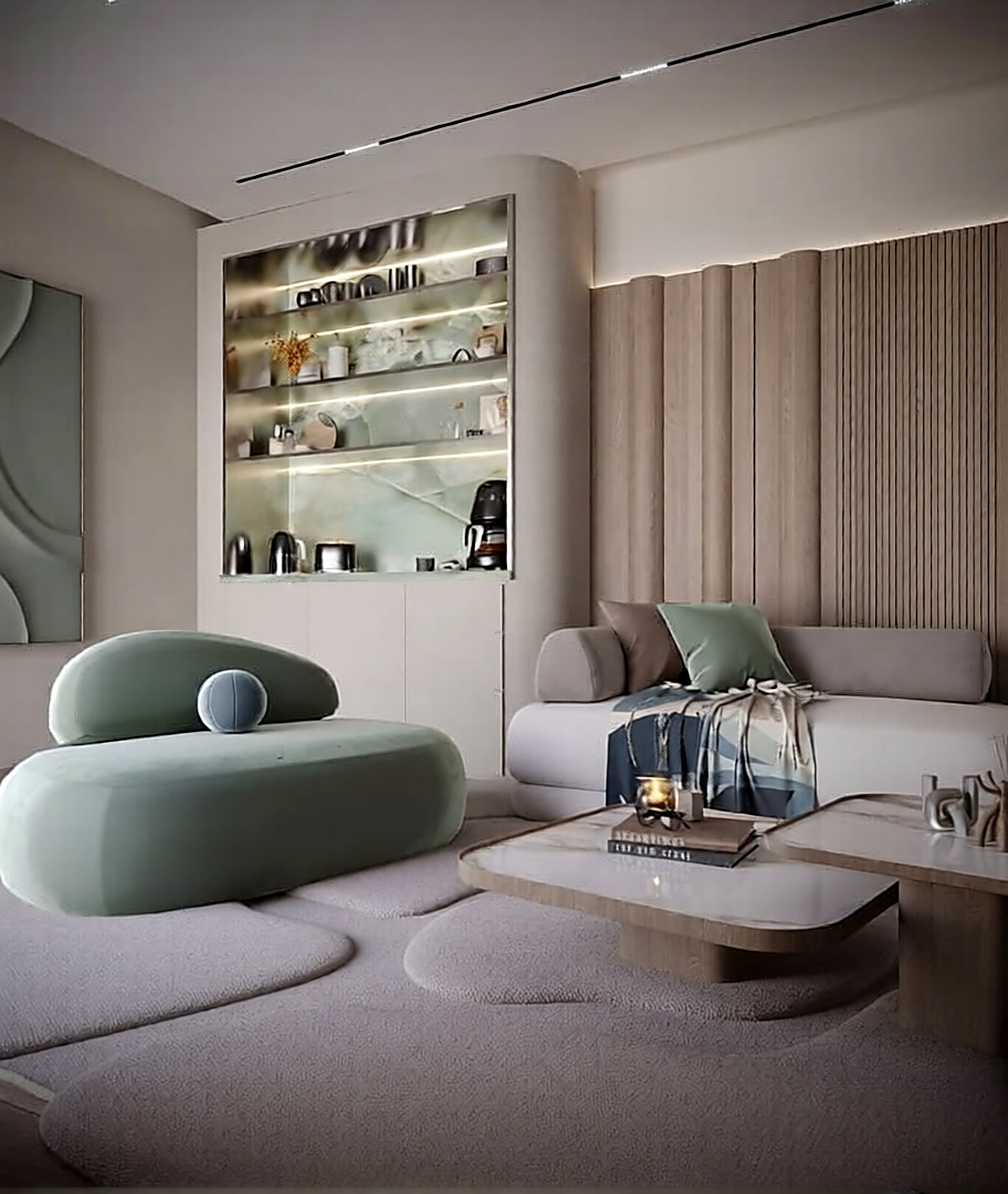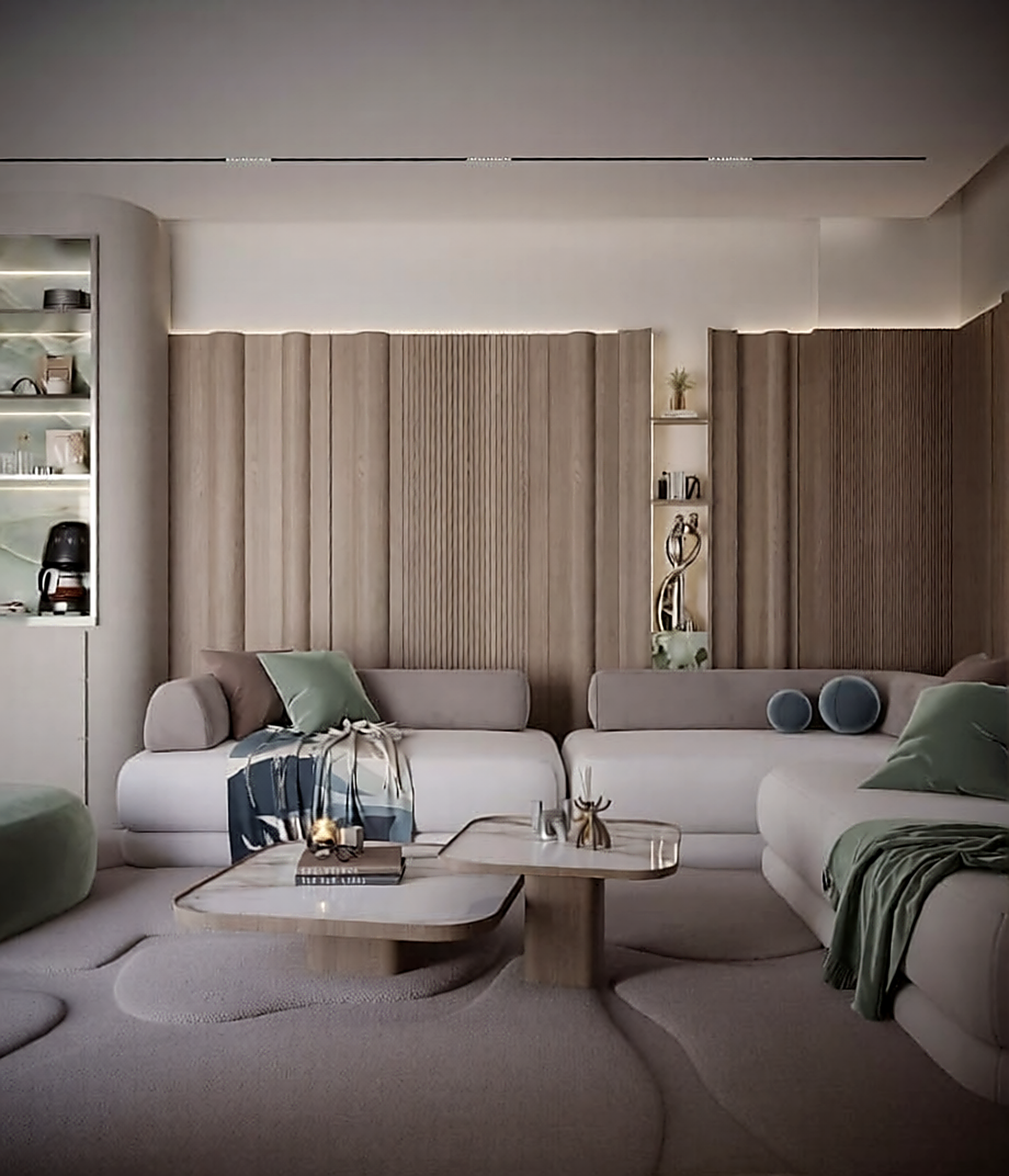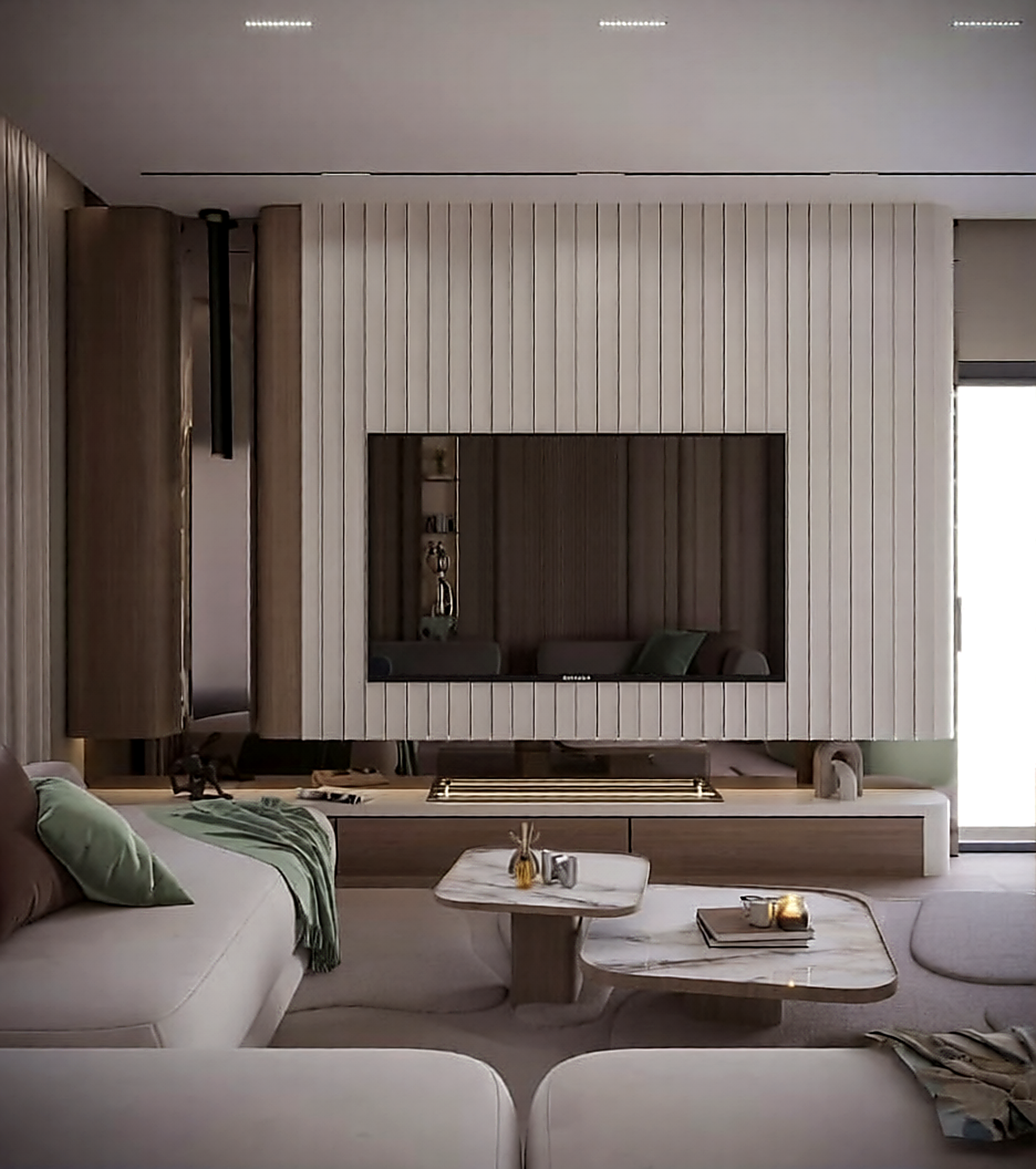
A meditative exploration of Eastern aesthetics where reverence for natural materials, artisanal craft, and spiritual calm converge. The Insidestory channels centuries of Asian design philosophy into spaces that honour tradition while embracing the rhythms of modern life.
The threshold is the first gesture — a timber-framed entryway inspired by Japanese genkan design invites a moment of pause. Shoes are exchanged for slippers on a step of hand-hewn stone, while a single arrangement of dried pampas in a celadon vase establishes the sensory tone: natural, unhurried, considered.
The main living space draws from the wabi-sabi tradition, embracing imperfection as a form of beauty. Walls finished in a raw clay plaster display subtle tonal variation, while the furniture is deliberately low to the ground — a custom daybed in oiled walnut, floor cushions in hand-dyed indigo linen, and a chabudai-style coffee table in aged teak. The window treatments are panels of sheer jute that soften incoming light into an amber warmth.
Across the corridor, a dining space pays homage to Chinese scholar's rock aesthetics. A shou sugi ban sideboard in charred cypress serves as the centrepiece, its surface bearing the organic patterns of controlled fire. Above it, a collection of ink-wash paintings is displayed on a gallery rail system, allowing the artwork to rotate with the seasons — a nod to the Asian principle of impermanence in decoration.
The bedrooms become sanctuaries of stillness. Tatami-inspired flooring in woven seagrass replaces conventional carpet, while shoji-style sliding panels partition the dressing area from the sleeping zone. Each room features a tokonoma — a recessed alcove for displaying a single curated object: a hand-thrown Raku tea bowl, a bonsai in a moss-covered stone tray, or a scroll of calligraphy.